For many, a vibrant mural on the side of a warehouse is a sign of urban renewal—a splash of color in a concrete jungle. But for those of us working in Community-Based Gang Investigations, graffiti is rarely just “art.” It is a complex language, a territorial claim, and sometimes, a eulogy.
To understand the art of graffiti from our perspective, you have to look past the aesthetics and see the intent.
The Great Divide: Street Art vs. Gang Tagging
In our line of work, we distinguish between two very different worlds that often get lumped together under the same name.
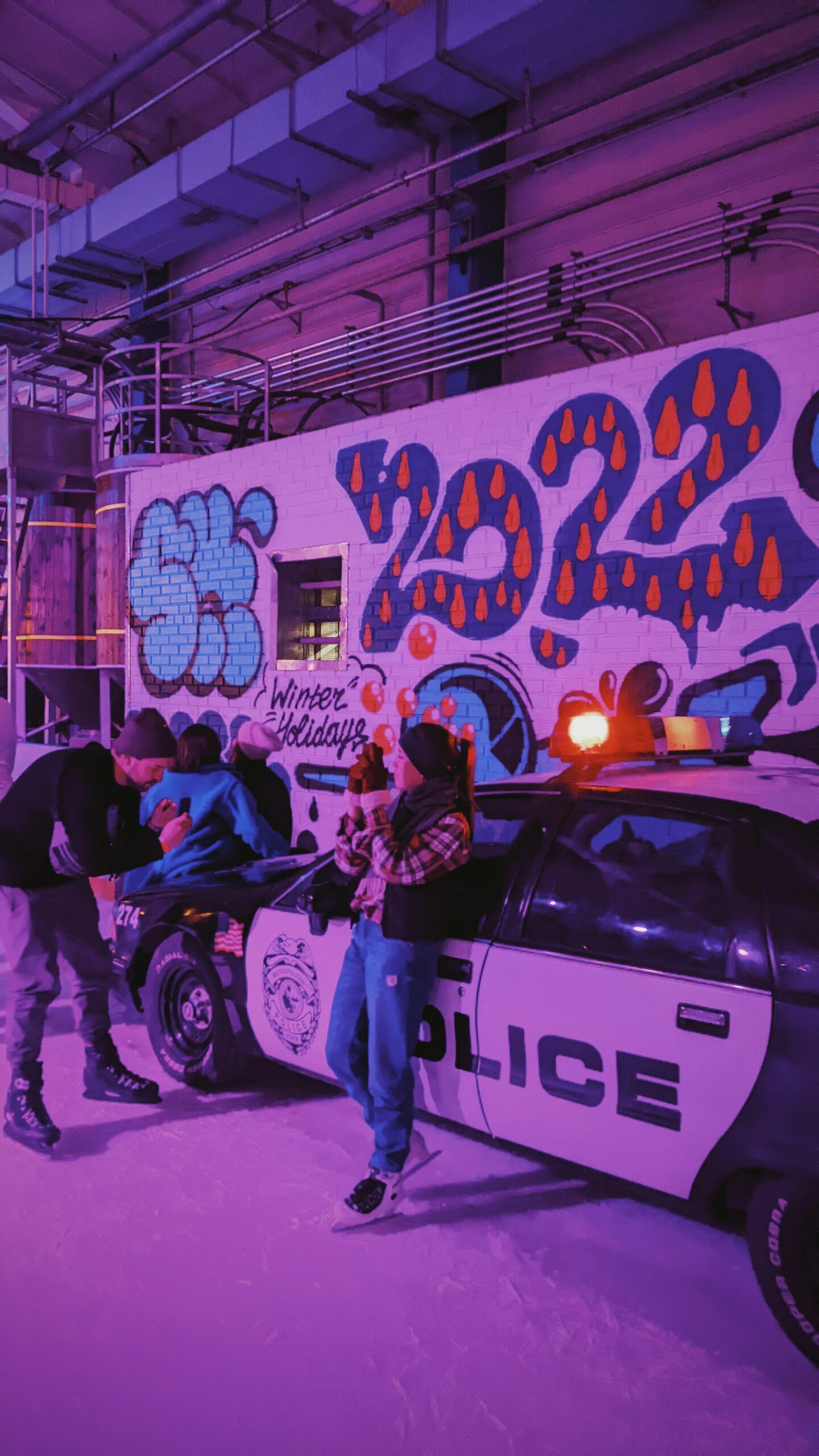
- Street Art/Murals: These are often commissioned or done with permission. They aim to beautify a space, provoke thought, or tell a community story. They take time, talent, and dozens of cans of high-quality paint.
- Gang Tagging: This is functional. It isn’t about beauty; it’s about presence. It is a rapid, high-stakes claim of “ownership” over a block.
When a tagger hits a wall, they aren’t looking for a gallery showing—they are marking boundaries. In the gang unit, we view these tags as the “newspaper of the street.” If you know how to read it, the wall tells you who is in power, who is at war, and who has recently passed away.
Decoding the Wall
To the untrained eye, gang graffiti looks like illegible scribbles. To an investigator, it’s a data set. We look for specific indicators that tell us the temperature of the neighborhood:
- The “Roll Call”: A list of nicknames (monikers) that tells us which members of a set are active.
- Cross-outs: If Gang A’s tag is crossed out by Gang B, it isn’t just “vandalism on vandalism.” It is a formal declaration of conflict. In our world, a fresh cross-out is often a precursor to a “shots fired” call.
- The “Rest in Peace” (RIP) Mural: While these can be touching, they often serve as a catalyst for retaliation. They keep the memory of a conflict alive, ensuring the cycle of violence continues.
The Cost of the “Canvas”
One of the hardest parts of my job is speaking with the homeowners and small business owners who wake up to find their property “hit.”
“It’s not just paint on a wall; it’s a message to my customers that this area isn’t safe.” — Local Shop Owner
There is a psychological weight to graffiti. When a neighborhood is saturated with tags, it creates a sense of lawlessness. It signals to residents that the “street” is in control, not the community. This is why rapid abatement—cleaning the graffiti within 24 to 48 hours—is our most effective tool. It “mutes” the gang’s megaphone.
Bridging the Gap
Our unit doesn’t just want to “buff” walls; we want to redirect the talent. We’ve seen incredible artists trapped in the gang cycle who use their skills for destruction because they feel they have no other outlet.
We advocate for Legal Walls—designated spaces where youth can hone their craft without the pressure of gang affiliation or the risk of arrest. By separating the medium (spray paint) from the motive (territorial dominance), we can support actual art while keeping our streets safe.
Final Thoughts
Graffiti is a visual representation of a city’s heartbeat. Sometimes that heart is full of creativity and hope, and other times, it’s pulsing with friction and threat. Our job isn’t to hate the art; it’s to understand the message—and to make sure that message doesn’t end in a tragedy.